Space
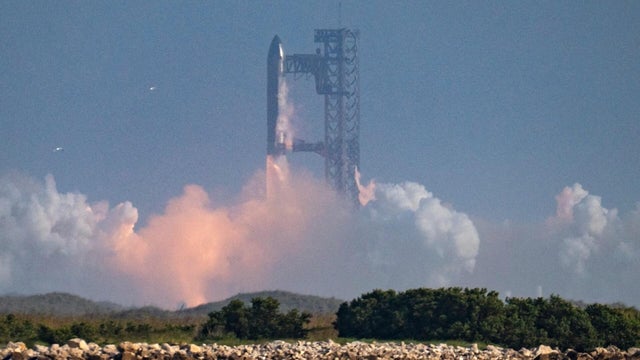
SpaceX's Super-Heavy Starship failed after launching, exploding and losing control during the program's ninth test flight. CBS News' Jason Allen has more from Dallas.

SpaceX's Super-Heavy Starship failed after launching, exploding and losing control during the program's ninth test flight. CBS News' Jason Allen has more from Dallas.

Elon Musk's SpaceX confirms that it lost contact with its Starship rocket as it made its approach to come down in the Indian Ocean. CBS News' Jason Allen and Bill Harwood have more details.
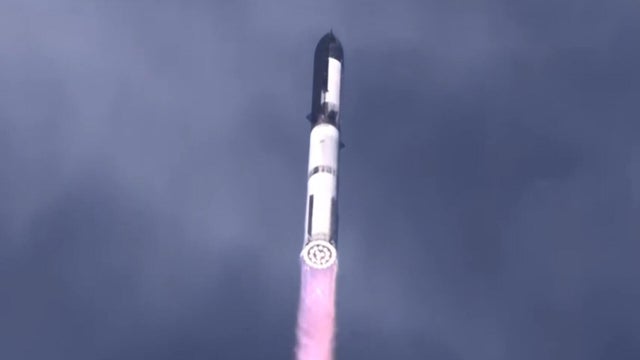
SpaceX's 400-foot-tall Super Heavy-Starship lifted off for its ninth test flight on Tuesday evening from Boca Chica, Texas. CBS News' Jason Allen has more.
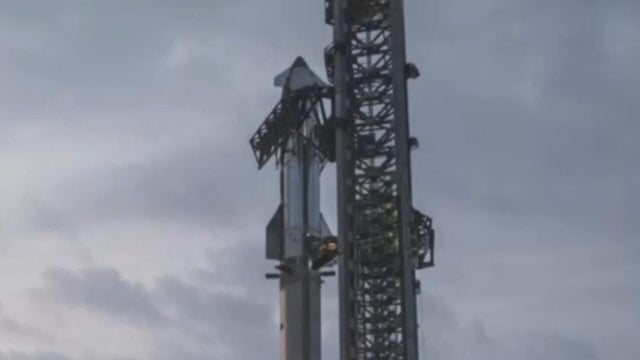
Elon Musk's SpaceX plans to launch its Starship rocket on a ninth test flight on Tuesday night. The last two tests broke apart, sending debris hurling back to Earth. CBS News correspondent Jason Allen has the details.
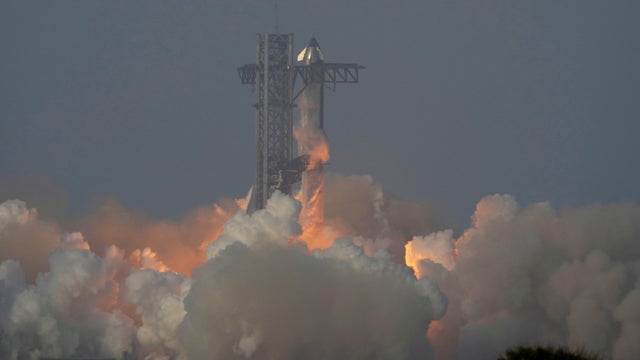
After back-to-back Starship upper stage failures, SpaceX on Tuesday again launched the world's most powerful rocket, but faced new problems.

The classical piece will be beamed into the cosmos as the Vienna Symphony Orchestra performs it.
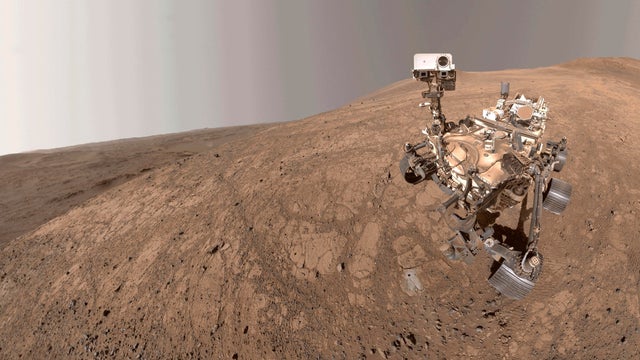
The latest selfie by NASA's Perseverance rover at Mars has captured an unexpected guest: a Martian dust devil.

Slope streaks once believed to be signs of water on Mars might really be signs of rockfall and high winds, a new study says.

When Apollo 13 astronaut Jim Lovell said, "Houston, we've had a problem," it was Ed Smylie who had the solution. "CBS Evening News" co-anchor John Dickerson has the story after Smylie's death at 95.
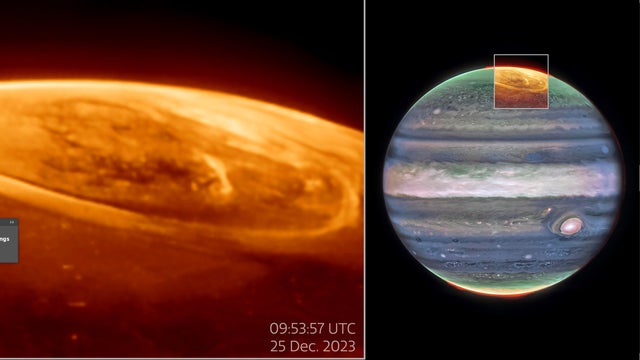
Jupiter's stunning auroras are hundreds of times brighter than those seen on Earth, as pictured in new images taken by the James Webb Space Telescope.

May's full flower moon will light up the night sky.

Kosmos 482 was launched by the then-Soviet Union in 1972 as part of a series of missions bound for Venus. But this one never made it out of orbit around Earth, stranded there by a rocket malfunction.
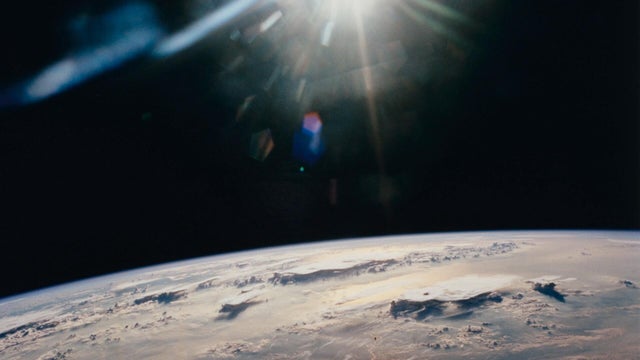
A Soviet-era spacecraft that was meant to land on Venus in 1972 is plunging back to Earth. Marlon Sorge, an executive director at The Aerospace Corporation, joins CBS News with what to expect.
A Soviet-era spacecraft meant to land on Venus a half century ago is expected to plunge uncontrolled back to Earth within days.
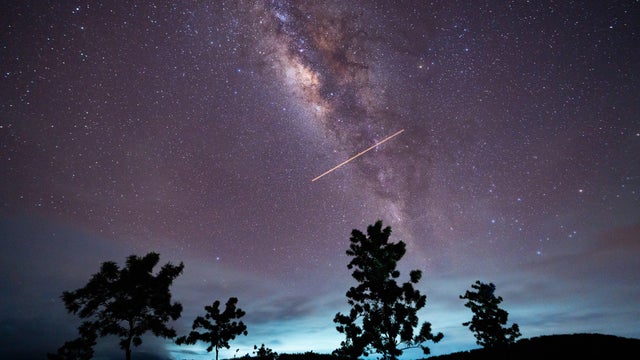
Meteors from the Eta Aquariids, known for their speed and created from space debris originating from Halley's comet, will zoom across the sky as the shower peaks.